
News

Leading Transformation: Interview with Shell Marine President Houda Dabboussi
Shell Marine’s president, Houda Dabboussi, recalls to David Hughes her journey to her current role and explains how the company is meeting the many challenges facing the marine fuels and lubricants sector
DH: Having led businesses, investments and growth strategies across diverse sectors and international markets, what would you consider the most formative moments of your leadership journey before Shell Marine? And how do those experiences influence the way you guide the company as the shipping industry works to reconcile today’s energy needs with its decarbonisation ambitions?
HD: If there is one defining theme across my career, it is leading transformation at moments when industries, markets and organisations are being reshaped. Whether in education, energy or lower-carbon solutions, I have been drawn to opportunities where the challenge is not simply to manage change, but to create growth, build new businesses and leave a lasting impact.
One of the defining experiences early in my career was helping build and scale what became the leading early English language learning business in China. We recognised a powerful shift underway and built a business that enabled thousands of families to invest in education as a pathway to opportunity and economic advancement.
Later, in the energy sector, I worked with governments and strategic partners across the Middle East and North Africa to develop projects that delivered reliable energy, supported economic growth and created long-term value for the countries and communities we served.
At Shell, that journey continued through integrated gas, commercial leadership, business development, M&A and lower-carbon solutions. Across those roles, my focus has been on helping shape new markets, unlocking growth opportunities and making investment decisions that create both immediate value and long-term strategic advantages.
Those experiences have been invaluable in leading Shell Marine at a time when shipping is navigating one of the most significant transitions in its history while being the backbone of our global economy. Our customers must balance today’s operational realities with long-term progress and decarbonisation ambitions, often amid considerable uncertainty. Our role is to help them navigate that complexity with confidence by combining deep customer understanding, market insight and practical solutions that deliver value today while creating options for tomorrow.
I believe the role of leadership is not to predict the future, but to help create it. Throughout my career, I have been drawn to moments of transformation, building businesses, unlocking new markets and helping industries navigate change. What excites me most about Shell Marine is that we are operating at one of those defining moments.
Our responsibility is not simply to respond to the future, but to help shape it. That is how I have always approached leadership: turning vision into action and action into enduring impact.
DH: Shell Marine is putting considerable emphasis on LNG, bio-LNG and synthetic LNG as a pathway. What would you say to shipowners who worry that LNG risks becoming a transition fuel without a clear transition?
HD: We see LNG as part of the shipping industry’s energy evolution, not an overnight transformation.
LNG offers a pragmatic and cost-effective alternative to fuel oil and a bridge to renewable methane. Because conventional LNG, bio-LNG and synthetic LNG are compatible with the same vessel technology and much of the same infrastructure, shipowners can progressively lower the carbon intensity of their fuel without changing the vessel or bunkering infrastructure, allowing them to adapt the fuel mix as regulations, fuel availability and commercial realities evolve.
Renewable methane’s biggest advantage is that it builds on an ecosystem that already exists. It leverages a global LNG market, established infrastructure and mature supply chains with scale well beyond shipping.
Shipping cannot build an entirely new global energy ecosystem on its own. The sector’s fuel demand is significant, and any pathway to scale will require alignment across producers, infrastructure providers, regulators, fuel users and cargo owners. Renewable methane benefits from being able to build on infrastructure, supply chains and investment that already exist across multiple sectors of the economy.
We are already seeing this happen. Bio-LNG is being used by customers today, demonstrating that renewable methane isn’t a future concept.
Bio-LNG can deliver significant lifecycle emissions reductions, with some manure-based pathways recognised as net-zero and net-negative in certain regulatory frameworks.
DH: Given the uncertainty around regulation, fuel availability and technology maturity, what characteristics should shipowners prioritise when making vessel investment decisions today to preserve optionality and avoid stranded assets?
HD: What makes today’s environment different is that shipowners are managing several uncertainties at once. A vessel ordered today is expected to operate for more than 20 years, during which fuel markets, regulation, technology and trade patterns will continue to evolve. Rather than trying to predict a single winning fuel, shipowners should ask a different question: how resilient is my newbuild investment across a range of possible scenarios?
The first consideration is operational resilience. For the first five to 10 years of a vessel’s charter period, can it reliably access fuel along the routes it trades? How robust are the supply chains and bunkering networks supporting that fuel? Recent disruptions have reinforced the value of being connected to a diversified energy market rather than relying on a narrow supply base.
The second is pathway readiness. As renewable fuels become more available, can the vessel increase its use of those fuels without major modifications or new infrastructure? Solutions that leverage existing infrastructure while accommodating renewable fuels offer a more practical route to scale.
The third is long-term investment value. Owners need to consider how regulation, carbon costs and fuel standards may evolve over the life of the asset, and whether the vessel can remain commercially competitive without significant retrofit costs or operational constraints.
Ultimately, the goal is not to predict the future, but to invest in vessels that can remain competitive as conditions evolve. In our view, LNG dual-fuel vessels combine operational resilience, pathway readiness and long-term investment value, positioning them well to navigate the fuel evolution.
DH: With FuelEU Maritime now in force and global regulation still uncertain, how is this changing the fuel choices and procurement strategies of shipowners?
HD: FuelEU Maritime’s first year offers a valuable real-world test of how lifecycle-based regulation influences market behaviour. Our analysis of reported vessel emissions data suggests a noticeable increase in the use of LNG, biofuels and bio-LNG among vessels trading within Europe. We have also seen widespread use of pooling, providing a practical compliance mechanism that gives operators greater flexibility while creating bankable demand for lower-carbon fuels. Together, these developments demonstrate that regulation can drive adoption when it rewards credible well-to-wake emissions reductions and strengthens the business case for lower-carbon solutions.
As a result, bunker procurement is becoming more than a fuel purchasing decision. Shipping companies operating in the EU are increasingly evaluating fuels through the lens of compliance, considering factors such as lifecycle emissions performance, certification, route exposure, fleet flexibility and future regulatory risk.
While FuelEU is creating momentum, the industry ultimately benefits from a global framework that provides clear investment signals and a level playing field. We believe that regulation should be fuel- and technology-neutral, based on well-to-wake emissions, and flexible enough to recognise different pathways to emissions reduction. It should reward real emissions reductions, support credible certification and mass-balancing accounting methodologies, and allow the most practical and scalable solutions to compete on their merits.
DH: Cargo owners and charterers are increasingly looking at the Scope 3 emissions associated with ocean transport, while IMO regulation is framed more around well-to-wake fuel intensity and ship compliance. How does Shell Marine see those two worlds coming together, and could Scope 3 pressure from cargo owners become as important as regulation in creating demand for lower-carbon marine fuels?
HD: We see cargo-owner demand and regulatory frameworks becoming increasingly complementary drivers of demand for lower-carbon marine fuels. Regulatory frameworks can help create the conditions for the adoption of lower carbon marine fuels by providing greater clarity and investment signals across the industry. At the same time, many cargo owners are seeking greater visibility into the GHG emissions associated with transporting goods and are exploring ways to support lower carbon transport solutions within their value chains.
We are already working with customers to explore practical mechanisms that can help bridge this gap.
Earlier this year, Shell collaborated with Mitsui O.S.K. Lines (MOL) on a book-and-claim initiative involving the use of lower-carbon marine biofuel.
The lifecycle GHG emissions data relevant to the cargo owners were recorded and allocated through an established registry process and subsequently made available to MOL customers through Environmental Attribute Certificates (EACs). This collaboration reflects ongoing efforts across the maritime value chain to explore mechanisms that can support customer demand for lower-carbon transport solutions.
As these trends evolve, demand from cargo owners has the potential to become an increasingly important factor alongside regulation. Regulation can create compliance-driven value, while cargo-owner demand may create additional commercial opportunities for emissions reductions that are not required for compliance or that fall outside regulated shipping activities. Together, these complementary drivers can help strengthen the business case for lower carbon marine fuel solutions across the maritime value chain.
Ultimately, we believe progress is likely to require collaboration across fuel suppliers, ship operators, charterers and cargo owners. Regulation and voluntary customer action can each play a role in supporting the development and adoption of lower carbon marine fuel solutions.
DH: Shell Marine’s recent sensor service points to digital and technical services as well as fuel supply. Is Shell Marine becoming as much a performance and data business as a fuels and lubricants supplier?
HD: Fuels and lubricants remain fundamental to what we do and underpin the relationships we have built with customers over many years. By combining high-quality products with technical expertise and digital capabilities, we help customers improve efficiency, enhance reliability and make more informed operational decisions. This integrated approach enables us to deliver solutions, not just products, strengthening our role as a trusted and preferred partner, and supporting customers’ evolving business and performance needs.
Shell LubeAnalyst helps customers understand equipment condition through laboratory testing and expert analysis. Shell LubeMonitor combines onboard and laboratory data to support maintenance decisions. While our latest Shell Marine Sensor Service provides continuous, real-time monitoring. Using an inline sensor and onboard traffic-light display, it gives crews 24/7 visibility of issues between routine oil samples. Our technical experts review the sensor data alongside laboratory results to identify trends and provide tailored recommendations.
We’ve already seen the value of this approach. On a large car carrier, continuous monitoring detected trace amounts of water that routine laboratory analysis had not confirmed, allowing the crew to investigate and address the issue before it developed further.
DH: With demand for lower-carbon marine fuels expected to grow, how is Shell Marine helping customers build confidence in the future availability and scalability of bio-LNG and biofuels?
HD: Customers are right to look closely at the scalability of lower-carbon marine fuels. Renewable fuels will not scale overnight, and availability will vary by fuel, region and route. The question is not only whether a fuel is available today, but whether there is a credible pathway to scale it reliably over time.
That is where Shell Marine can help. We work with customers to assess how renewable fuels such as bio-LNG can fit into their fleet today, while also supporting discussions around medium- and long-term fuel strategies and offtake arrangements.
We help customers understand where supply is developing, how regulations are evolving, and what is needed to support wider adoption, including certification, chain-of-custody systems and the infrastructure required to deliver these fuels safely and reliably.
The long-term supply potential is one reason we see bio-LNG as a promising renewable fuel for shipping. The International Energy Agency estimates that up to 1 trillion cubic metres of biomethane could be produced sustainably each year, while only a proportion of that potential is being utilised today. Biomethane is therefore one of the strongest renewable fuel opportunities available and has the potential to make a meaningful contribution to sectors that are difficult to electrify, including shipping.
For bio-LNG, a key advantage is that it can leverage existing LNG infrastructure and vessel technology. This means operators of LNG dual-fuel vessels can begin reducing the lifecycle emissions intensity of their fuel mix today, where bio-LNG is available, without waiting for an entirely new marine fuel ecosystem to emerge. As supply grows, customers can progressively increase the proportion of bio-LNG in their fuel mix to support their carbon intensity targets.
 Member Only
Members only This content is available to IBIA members. Please sign in to continue. Sign in
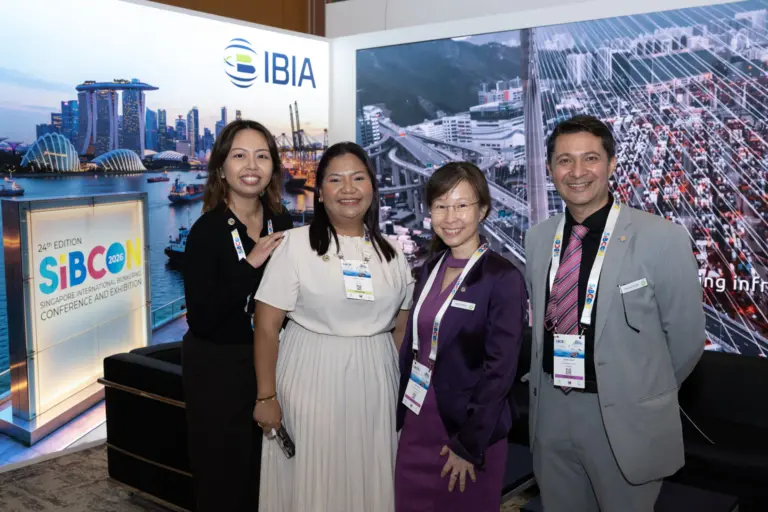
The IBIA Drinks Reception proved to be a highlight of the week, bringing together members, industry colleagues, and friends from across the global bunkering and maritime community in a relaxed and welcoming setting. It was fantastic to see so many visitors at the IBIA booth, creating an excellent opportunity to catch up with familiar faces,…
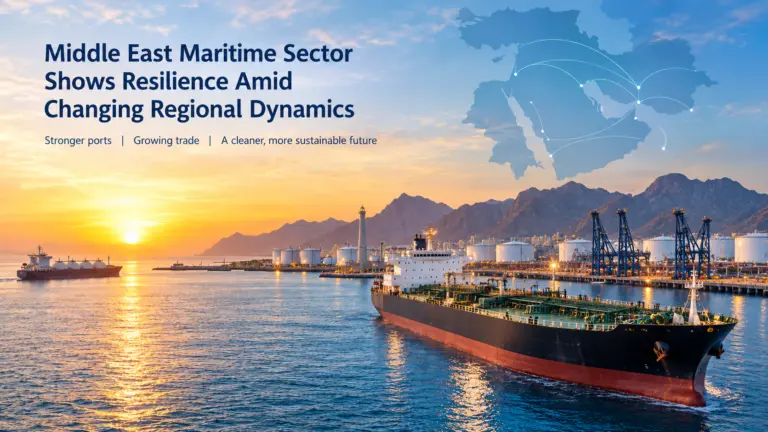
The Middle East maritime sector continues to adapt to a rapidly evolving operating environment. While geopolitical developments have affected traditional bunkering patterns in some areas, the region’s ports, logistics networks and maritime infrastructure continue to demonstrate resilience and attract significant investment. During a recent meeting of the IBIA Middle East Regional Board, members discussed current…
 Member Only
IBIA documents submitted to the IMO IBIA has submitted a series of documents to IMO’s Marine Environment Protection…