News
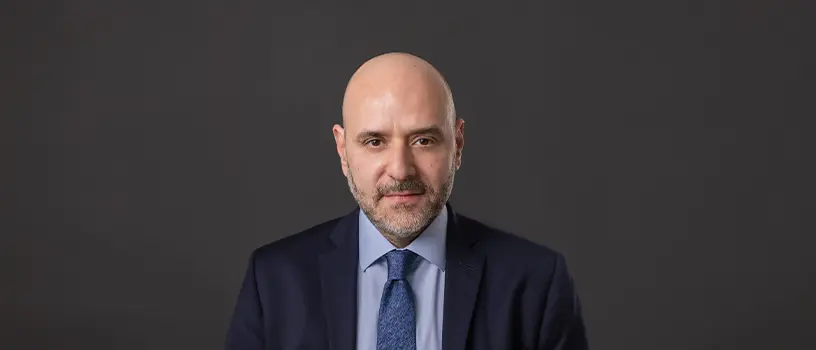
Chair’s Letter 2025
Dear friends and fellow IBIA members,
The third quarter of 2025 has been a period filled with IBIA activity worldwide.
I was honoured to represent our Association at APPEC in Singapore, where a one-on-one discussion with S&P Global Insights allowed me to set out IBIA’s core aspirations, principles, and activities. My further participation in a leadership panel also highlighted our realistic impact on knowledge sharing and informed decision-making.
Immediately after Singapore, I attended London International Shipping Week, where I contributed to discussions on fuel uptake and production prospects during a World Maritime Forum round table, and spoke about our association at City Hall, in a well-attended event organised by LISW, focused on mapping the challenges of the marine energy industry. The week culminated in the IMO’s main forum, where we were all hopeful that the Net Zero Framework measures would pass in October.
These expectations proved timely but ultimately did not materialise. As described in detail in this issue, the extraordinary session of MEPC prompted many — and sometimes conflicting — reflections. A pause button was pressed. As we emphasised soon thereafter and discussed during a dedicated Members’ Meeting, this is not the end of the road but the beginning of a diverse one — one calling for even more rigorous work, attention to detail, and engagement with the concerns raised by several IMO member states. The unprecedented nature of both the session and the surrounding lobbying should not distract us from what is at stake and the steps that must follow.
In November, during our highly successful Annual Convention in Hong Kong as part of Hong Kong Maritime Week, we set out clearly where we stand, what IBIA can do, and how firmly our Association is now positioned at the centre of marine-energy developments. The Secretariat’s organisation was impeccable, the attendance of the highest level, and our panel discussions covered the widest range of issues that now call for action on our part.
Transformation is rarely linear. With its IMO consultative status, IBIA continues to help regulatory authorities, administrations, fuel stakeholders, and shipowners overcome formidable challenges. Work progresses at the IMO, where we actively participate in the intersessional meetings of the Working Group on Reduction of GHG Emissions and in preparing guidelines for the recognition of sustainable-fuel certification schemes, while sponsoring and co-sponsoring submissions that aim to lay out, clearly and scientifically, the roadmaps needed.
Hong Kong Maritime Week also provided a unique platform for in-depth discussions with government officials on their decarbonisation ambitions. I felt the energy of the city’s maritime tradition, contributed to their forum, participated in a Capital Link panel, and engaged with dignitaries from several countries — all reflecting IBIA’s traction and momentum, reinforced by the launch of our new brand and striking new logo.
Over the past two years, IBIA has evolved considerably. We have consolidated our global voice, broadened our membership, empowered our Regional Boards, and deepened our presence at the IMO and across key industry partnerships with ICS, Intercargo, Intertanko, GCMD, and BIMCO.
As I have said since being elected Chair, progress is built collectively but also requires leadership, clarity of purpose, and the willingness to confront complexity. My background in law and shipping has taught me that durable change depends on sound governance, commercial insight, and the courage to question precedent. These principles guide our work at IBIA — where the legal, commercial, technical, and operational dimensions of marine energy converge.
Decarbonisation is an active transition that tests our creativity, our resilience, and our capacity for synthesis. The journey is irreversible. And Hong Kong — as a bridge between East and West, a living experiment in transition where ambition meets reality — proved an ideal setting to reaffirm that diversity of perspectives. This is what we showcased during our Annual Convention. This is our strength. Within IBIA, all voices are present and vocal: energy producers, bunker suppliers, shipowners, classification societies, surveyors, port authorities, lawyers like me, and regulators — each offering a different perspective yet united by the same objective: making our industry more transparent, efficient, and sustainable.
Hong Kong Maritime Week sought to translate knowledge into progress, and ideas into projects. That is the leadership spirit IBIA embodies — and it was the purpose of our Convention, which also marked the beginning of a mutually beneficial cooperation with the Hong Kong Shipowners Association through the signing of an MoU. More will follow, always built on a sound, holistic expansion plan.
Dear friends, IBIA has continuity, strategy, and — above all — focus: knowledge, impact, and influence across all matters relating to the future of bunkering and a realistic path toward a sustainable shipping industry.
Global regulations and relevant roadmaps may not yet be carved in stone, but our steadfastness and commitment are.
With warm regards,
Constantinos Capetanakis
IBIA Chair
 Member Only
Members only This content is available to IBIA members. Please sign in to continue. Sign in
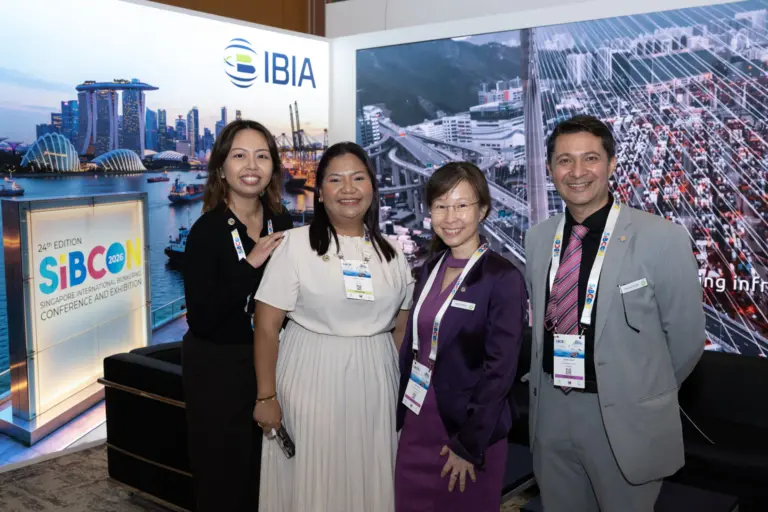
The IBIA Drinks Reception proved to be a highlight of the week, bringing together members, industry colleagues, and friends from across the global bunkering and maritime community in a relaxed and welcoming setting. It was fantastic to see so many visitors at the IBIA booth, creating an excellent opportunity to catch up with familiar faces,…
The Middle East maritime sector continues to adapt to a rapidly evolving operating environment. While geopolitical developments have affected traditional bunkering patterns in some areas, the region’s ports, logistics networks and maritime infrastructure continue to demonstrate resilience and attract significant investment. During a recent meeting of the IBIA Middle East Regional Board, members discussed current…
 Member Only
IBIA documents submitted to the IMO IBIA has submitted a series of documents to IMO’s Marine Environment Protection…